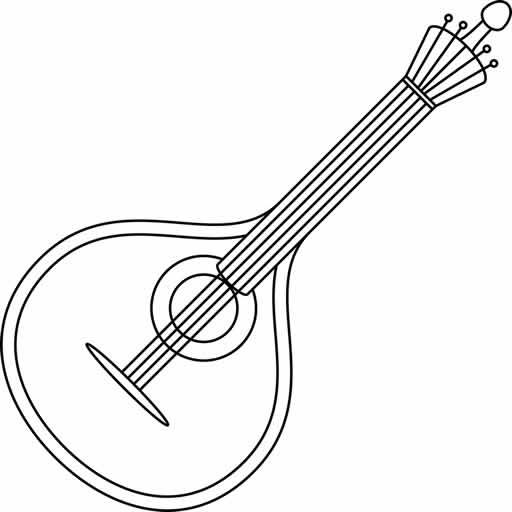
Playing notes on a mandolin is known as picking. Here’s a quick guide on how to pick notes on the Mandolin. Picking notes on this beautiful sounding instrument is all about getting those strings to sing!
What thickness/guage of pick/plectrum to use?
The mandolin is typically played with a pick, also known as a plectrum. Picks come in various shapes, sizes, and colours. The most common one is the teardrop-shaped pick, like the one shown below.
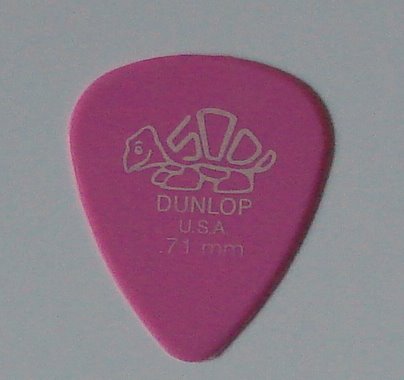
Picks also come is different thicknesses. Thickness is often referred to as gauge. The thicker the pick the more stiff it is. Mandolin players usually use medium(~0.7mm) to heavy(>1mm) gauge plectrums. The gives you greater control over the pick and a better tone when playing single note. When strumming chords you might want to use a thinner gauge pick.
Picks are actually pretty cheap, around £1 in the UK. So as you become more skilled, you can try out different picks without breaking the bank. I really like the DAVA jazz picks. They have this handy rubber grip that keeps them from slipping out of your hand. Plus, you can change the sound by adjusting how you hold the plectrum.
Playing/Picking a downstroke on mandolin
When beginning to play a mandolin it is helpful to have a good picking technique from the start. This gives you good tone when you are playing. Good for you and your audience!
I recommend holding the pick between your thumb and index finger as shown below:-
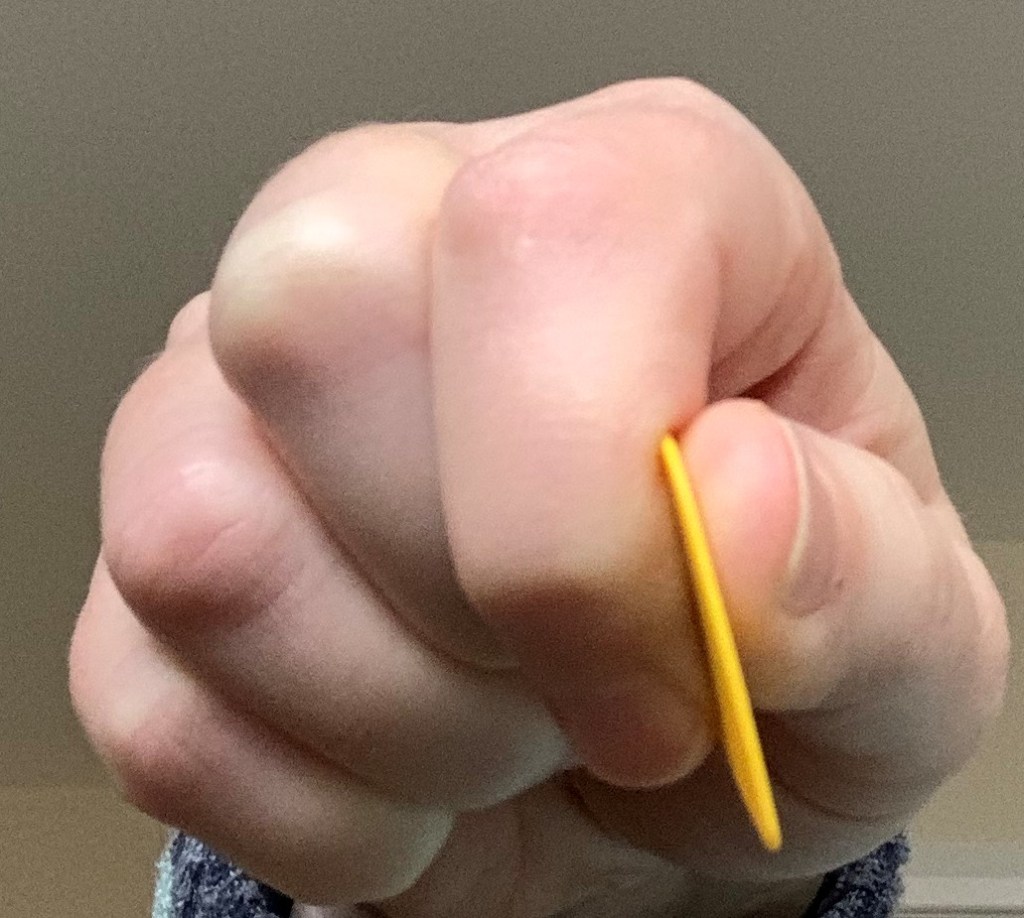
The thumb is at right angles to the pointy end of the pick. (Some players use the round end of the plectrum to play. This is something you might want to try as you get more experienced)
Start by playing just open strings (don’t worry about your left hand yet). Hold the pick quite loosely but not so loose it comes out your hand when you play. Rest the plectrum against a pair of strings then push down to play the note on the strings. Make sure you play both strings. The movement comes from your wrist. The plectrum comes to rest on the next pair of strings. When playing the high E string you can imagine a set of strings below and stop your plectrum there. This is known as a downstroke.
It is good to practice downstrokes by playing the same note over and over again along to a metronome. Maybe a bit boring but worth it in the long run!
Alternate picking on a mandolin
Once you have mastered the downstroke you can move onto upstrokes. Upstrokes help you develop speed and fluidity in your playing. An upstroke is the reverse of a downstroke.
Start by resting the plectrum on a pair of strings. Then move the plectrum up in the reverse of downstroke. The plectrum comes to rest on the pair of strings above it.
Playing downstrokes then upstrokes is known as alternate picking. You can practice alternate picking by playing the same pair of strings in an up/down pattern along to a metronome. Again maybe a bit boring but worth it in the long run.
 Scottish Mandolin