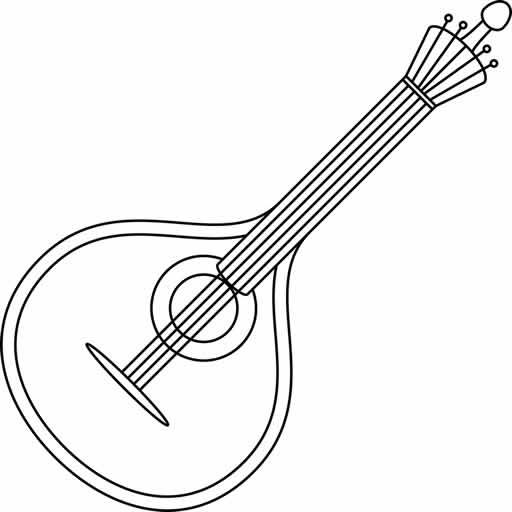
Choosing your first mandolin can be daunting. There are so many colours, shapes and prices to choose from. You don’t want to spend your hard earned cash one not suitable for you! Hopefully this guide will help you in your quest to find the perfect mandolin.
What type of Mandolin to choose?
The A and F style mandolins are based on models developed by Gibson in the 1920s. See picture below. They are most commonly used in bluegrass music however they are used widely in Celtic Music music as well. A Style mandolins are generally teardrop in shape and have f holes (f shaped holes like those on a violin) or an oval soundhole. The F-style Mandolin is shaped more like a guitar and has curly scroll on the top left hand side. It can also have f holes or an oval soundhole. The A and F style generally have a slightly arched top.
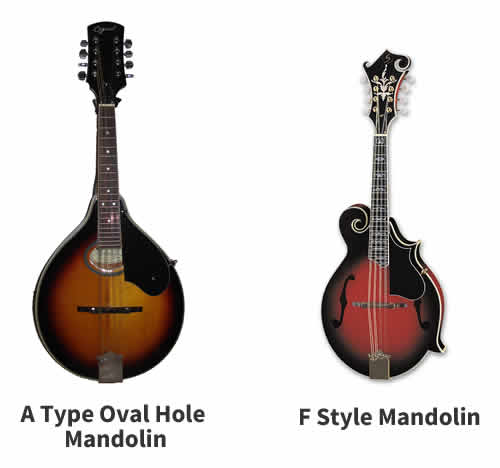
An oval hole is considered more suitable for Celtic music where the melody is normally played. It gives a louder sound than f holes. F Holes are considered more appropriate for bluegrass playing where chop chords are played.
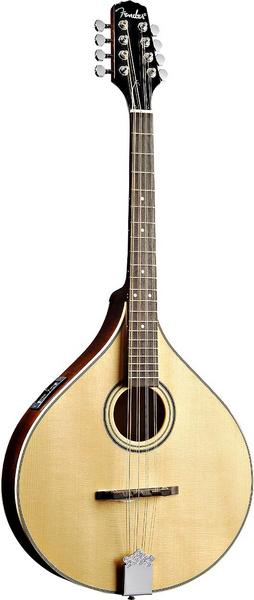
The Flat Top or Celtic mandolin shown below has a flat top and usually an oval sound hole. This is used more in Celtic music.
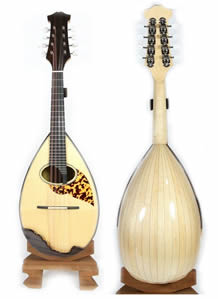
The bowl back type of mandolin shown below is mainly used in classical playing. It is not commonly used for playing bluegrass and Celtic music.
It is helpful to try different types of mandolin to see which you prefer.
Types of Wood on Mandolins
The sound of a mandolin is mostly down to the wood used to make it. Cheaper mandolins usually use laminate woods (several layers of wood glued together) on the top, back and sides. In general this does not give as warm and pleasant sound as a mandolin made with all solid woods. Some mandolins will have a sold top and laminate back and sides. This usually gives a warmer sound than laminate only.
Where to buy your Mandolin
The main choices you have when purchasing your first mandolin are via internet shopping, in person in a music shop or direct from a individual luthier.
One of the main advantages of the internet shopping has is that you have a vast choice. You may even be able to get a 2nd hand mandolin via the likes of Ebay. The price may be cheaper over the internet.
One of the main disadvantages of internet though is that you will not be able to try that actual mandolin before you buy it (unless the seller is local of course). Even two mandolins of the same make can sound and feel different. It depends on the wood used.
If you buy your mandolin at a music shop you will be able to try it. You will also be able to get advice from the sales people in the shop as to the best mandolin for you. The mandolin might be slightly more expensive but it might be worth it in the long term. I personally like to try musical instruments before buying them.
The mandolins made by an individual luthiers are usually high quality expensive instruments. Usually beginners would not want to pay such high price.
What features to look out for when buying a Mandolin
As a minimum things to look for are a straight neck, comfortable action (the strings are not to far from the fretboard and easy to press down) and working tuning pegs. You also want to like the sound!
Setting a budget for your Mandolin
When you first start playing the mandolin you might not want to spend too much at the start until you see if you like it. However if you purchase a mandolin that is very cheap you might find it awkward to play and not like to sound from it. Cheaper mandolins can have a high action making it difficult to press down the strings therefore harder to play.
My advice would be if you can don’t buy the cheapest available (in the UK at the moment (2023) the cheapest mandolins bought new are about £120). If you can stretch up to about £200 new then you will likely get an instrument that sounds reasonable and is easy to play. If you go up to over £300 you will get instruments with a solid top. As described above a solid top gives a warmer sound. If you go over £400 you start to get all solid wood instruments. These give a much warmer sounds.
Like anything the more you pay the higher quality instrument you get. Mandolins go up to over £2000 in the UK.
 Scottish Mandolin